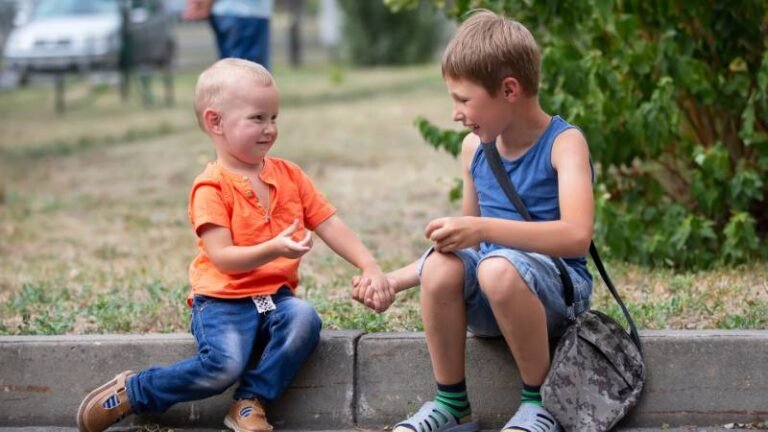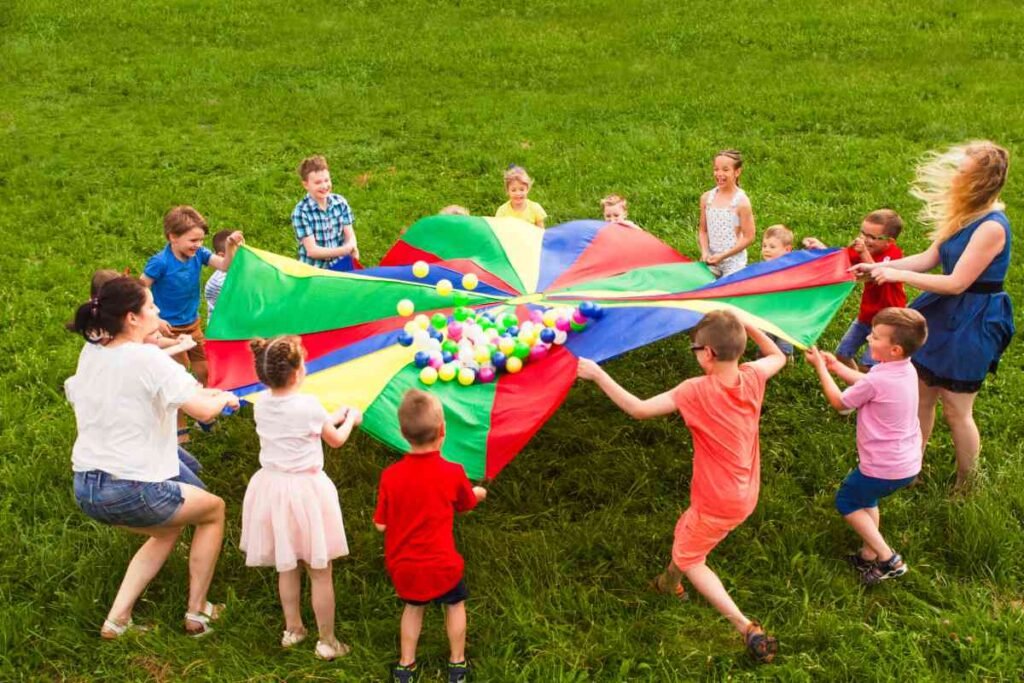
La capacidad de nuestro pequeño de relacionarse con los demás, se va obteniendo a partir de los primeros años de vida. Teniendo en cuenta que cada vez hay más niños que asisten a sus respectivas guarderías o preescolares, lugares donde tienen contacto constante con otros niños. Los niños comienzan a socializar antes y fuera del ámbito familiar. Conseguir que sean sociables es una muy importante habilidad que se debe promover e incentivar en el niño, tanto dentro de su familia, como en su respectivo preescolar.
Play is one of the main resources used when socializing among infants. From the time they are little, children will always seek to achieve a relationship with their peers. However, the way this relationship develops can change . During the first months of life, the child practically unconsciously seeks communication with adults through gestures, smiles or even noises. As time goes by, these behaviors will become conscious on the part of the child.
The best way to train the socialization of our children is through contact with adults through imitation . It is through us that the little ones will learn how to function correctly in society . These learnings will be taken directly to the relationship with their respective colleagues. Therefore, if we want our children to acquire the social values necessary for good social performance in the future, it is important that we set an example and correctly transmit those values on a daily basis in terms of socializing. Likewise, it is important that we control our children's emotions , this is a very important task for us parents. With it, we will teach children to self-regulate their own emotions and not act out of impulsiveness. Improving their social behavior and providing them with better performance in this area of their life.
Some activities that can improve socialization in our children
1. Buy a pet to socialize with
Recent research indicates that children with autism who have pets develop social skills more easily . In particular, they are better at introducing themselves, answering questions, and asking others for information. Pets provide an opportunity for children to form emotional bonds and respond to the emotions of others. They are also a valuable conversation point, giving children stories to share during interactions with their peers.
2. Throw a bean bag
Sometimes the simplest games can encourage the most important behaviors. Bean bag tosses are particularly effective in promoting socialization in children with autism. This is because they provide clear reinforcement of nuanced communication: children ask, usually through non-verbal cues, for the bean bag and are rewarded by having it thrown their way.
3. Compile a video clip
Video modeling involves showing children clips of desirable behaviors. Studies show that children with autism who watch these videos have an easier time imitating the behaviors depicted and applying them to new circumstances. They also tend to remember the videos long after watching them. This reinforces social skills as children learn to imitate behaviors.
4. Introduce improvisation to socialize
Acting exercises, particularly improvisational theater activities , provide children with autism with a low-risk opportunity to practice social interactions with others. Through theater, you can simulate a wide range of real-life scenarios in which children with autism might have trouble socializing. With positive reinforcement from you and their peers, children will gradually learn to anticipate and react correctly to a variety of emotions.
5. Let them lead
Children with autism need to learn to interact with their peers to develop social skills, but too much interaction in an unfamiliar environment can be too stimulating . To promote socialization in children with autism, organize group games and activities in which the child has the opportunity to lead. By putting them in charge of activities, they can judge their own limits , stop when they exceed those limits, and gradually learn to interact effectively.
6. Reinforce results
Whether they are interacting with you, their peers, their pets, or anyone else, if your child shows signs of better behavior , validate those behaviors. Reinforcement can be as simple as praising them, although you may want to provide rewards for good behaviors demonstrated under particularly difficult circumstances. Ideally, these rewards should be clearly related to the behavior.