I am sorry to tell you that the path of language is long and requires extensive, deep and consistent preparation in terms of motivation, attention and imitation. This will not only bring us the development of language, but the most important thing: autonomous learning, independence and constant evolution towards autonomy and personal development.
Our children not only have to learn language but many things such as motivation, attention and imitation before that. So let's go step by step!
THE MOTIVATION
Para prepararlos para el lenguaje tendréis que encontrar aquello que les motive. Quiero que no solamente hagáis una lista de lo que les gusta a vuestros hijos en cuanto a objetos, comida o actividades, sino que trabajéis en ampliar esa lista. Una de las cosas que trabajamos en las terapias iniciales es ampliar las cosas que motivan al niño, lo que en una metodología ABA se conoce como reforzadores. Los necesitamos y serán imprescindibles para ir trabajando más adelante, porque serán el anclaje que hará que nuestros niños quieren estar ahí con nosotros.
En los niños no verbales es tan necesario este concepto porque la motivación no sigue los mismos parámetros y no se rige naturalmente como la nuestra. Es necesario encontrar aquello que motiva a nuestros niños y hacer un ejercicio de investigación y de exploración para ampliar mucho más ese registro motivacional. Unos ejemplos que pueden ayudaros son: saltar en la cama, hacer pompas de jabón, jugar con el agua en un barreño, la música, instrumentos, canciones, sonidos. También reforzadores primarios cómo algún alimento u objeto que les guste manipular. Incluso las propias personas pueden ser reforzadores de esos niños.
La idea del trabajo de estos motivadores es que, a través de ellos, consigamos desarrollar fotos mucho más sociales y verbales. Si establecemos una asociación mientras su motivador está ocurriendo con señales, frases, unas palabras, éstas podrán actuar de la misma manera cuando ya no los asociamos a esos motivadores.
In summary, the first step is to discover the reinforcers and then do a systematic job of giving verbal labels while we are doing them. It is very important that every time everyday moments end we resort to this exercise to ensure that the activities and objects become broad reinforcers, enriching the lives of our children and giving them joy. Because without emotion there is no learning or will; So keep this resource in your pocket so that it is always at hand.
THE ATTENTION
Attention is the second process that takes place prior to language. Eye contact will be the first aspect that we will work on with our non-verbal children, helping us with those magnificent reinforcers to carry out an exercise to reinforce all the eye contacts that the child makes. With this we seek interaction with our little ones: we have to find it and fix it. And this second skill is the response to their name, every time our children turn around when they hear their name we will be reinforcing those motivators so that it happens again.
El tercer aspecto es la permanencia del objeto. Esta habilidad es innata en los niños sin trastornos, pero muchas veces no está desarrollada en nuestros niños no verbales. Es muy importante desarrollarla para entender el funcionamiento del mundo ya que cuando no se desarrolla bien genera muchísima conducta, estrés y ansiedad porque los niños sienten que las cosas que no ven o que dejan de ver desaparecen. Eso puede ocurrir con sus objetos favoritos, con una persona, con su madre.
Para desarrollar la permanencia del objeto son muy importantes los juegos del cucú y peekaboo: ocultarse debajo de una manta o esconder objetos dentro de una caja llena de lentejas. Tenemos que enseñar al niño que pasa con esos objetos, por lo que es muy importante ir progresivamente con estas actividades. Os invitamos a esconder los objetos primero parcialmente, que puedan ver un trozo y poco a poco acabar escondiendo el objeto entero e incluso con transición, es decir escondemos el objeto fuera del alcance del niño.
Although it may seem like a simple skill, the vast majority of non-verbal children have great difficulty developing it and it even generates a large percentage of the stress that the child suffers from this change in the environment that they are not able to understand. Assemble bags, trunks, sheets, boxes and dedicate significant time to developing the permanence of the object.
Finally, signaling is important in this attentional phase. Although it is not a skill that all children develop, it is true that achieving this skill greatly facilitates family life, communication with our non-verbal children, and their emotional health. There is no need to become obsessed with it and of course you have to give it all the non-invasive physical help possible: physically helping, but without forcing. We can manipulate the child's body and redirect it with our own, give verbal help by telling him what to do, help by signaling us, etc.
So at the beginning of the activities it is very important to give as much help as possible and reinforce. Little by little we withdraw the help and increase those reinforcers because he is already doing it on his own. Remember, motivation, attention and imitation. Let's go for the latter.
THE IMITATION
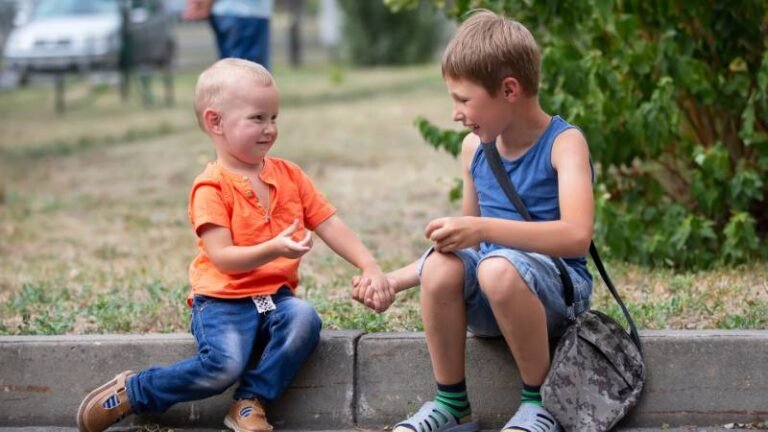
After having worked through the entire motivational phase, we are happy, active, animated and attentive. With these ingredients is when joint attention emerges, active communication within a framework where we learn something together, we attend to an activity hand in hand: there, in this context, is where imitation arises.
Existen muchos tipos de imitación, algunos más sencillos que otros, pero es estrictamente necesario que el niño tenga esta capacidad. La imitación con las manos, con los brazos, los pies, las, piernas, la boca, la lengua, la cabeza… toda esta coordinación nos dará la base para controlar todos los aspectos prerrequisitos del lenguaje. Es a través de esta imitación que llegaremos a la imitación verbal, que nuestro hijo sea capaz de imitar lo que las otras personas dicen y aprenda del contexto de todas las personas que le rodean.
Motivación atención e imitación; las familias que están en Método VICON están muy familiarizados con todos estos conceptos y la importancia de cada uno de ellos. Todos son progresivos y evolutivos, por lo que es muy importante que cada uno de ellos esté fuerte, desarrollado y activo para que emerja el lenguaje.