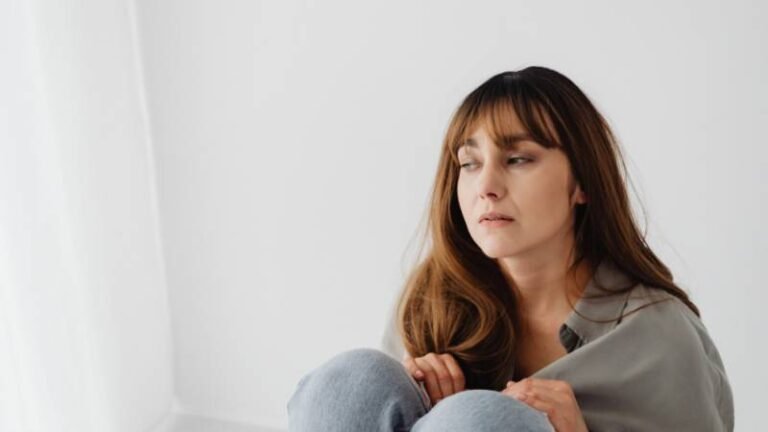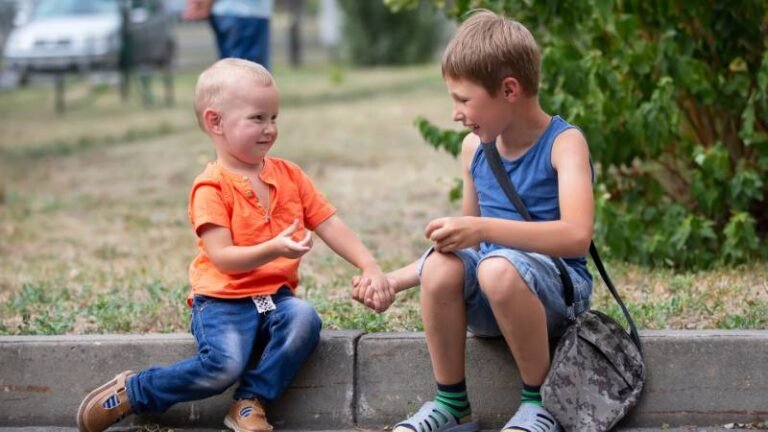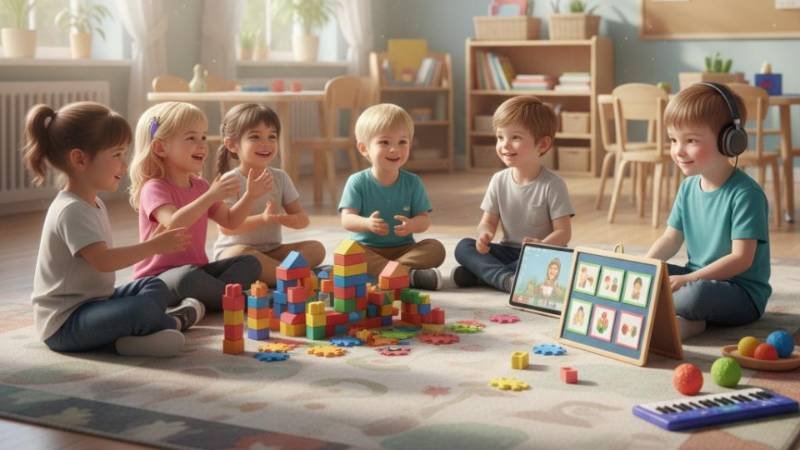
When words cannot yet come, the body and music speak for the child.
There is something magical about the moment a child moves their body to the rhythm of a song.
That connection is not only emotional: it's cerebral.
Rhythm activates areas of the brain linked to language, attention, and memory.
That's why, when we combine music and movement, we create the perfect scenario for language to emerge naturally.
In this article I want to tell you how this connection translates into real results within the VICON Method, a methodology that unites science, emotion and play to stimulate communication in children with language difficulties.
1. The musical brain: a bridge to language
The research is clear: music stimulates both hemispheres of the brain and strengthens the neural networks that process rhythm, intonation, and meaning.
In children with language difficulties, these pathways may be blocked or underactive.
Music then becomes an alternative access point: a bridge that connects emotion and communication.
In the VICON Method we use melodies and rhythmic structures designed to awaken attention, regulate the body and prepare the child for imitation and vocalization.
When the brain feels pleasure from sound, it opens itself to learning.
2. Movement as a language
Movement not only releases energy: it organizes thought.
Through the body, the child understands space, time, sequence… and all of that is language in action.
That's why at VICON we don't ask the child to "repeat", but to feel.
A gesture, a sway, a jump, or a clap can be the start of communication.
The body accompanies the sound, and the sound is transformed into words.
When a child dances, imitates, or keeps the beat with an instrument, their joint attention is activated.
And that moment—that shared look while a song plays—is the first step toward functional language.
3. From imitation to intention
In the first stage of language stimulation, we do not seek to "teach" words, but to provoke communicative intent.
The child discovers that his actions generate a response: when he plays the drum, it makes a sound; when he sings, the adult responds; when he claps, the environment celebrates.
That feeling of being able to influence the other person is the heart of communication.
Over time, the imitation of sounds transforms into syllables, syllables into words, and words into phrases.
But it all starts with a gesture, a smile, a shared movement.
4. How to apply it at home or in the classroom
You don't need to be a musician or therapist to integrate music into your routine.
Here are some practical ideas:
Create short songs for daily routines (“wash your hands”, “put away your toys”).
Accompany each word with a gesture or movement. The body reinforces verbal memory.
Use simple instruments: maracas, drums, bottles filled with rice. The important thing is the rhythm, not perfection.
Mimic their sounds and movements: reciprocity is more powerful than correction.
It always ends with a pause: that silence invites the child to respond.
Every small musical moment is an opportunity for language.
5. Results that are felt, not just measured
I have seen children who did not utter a word smile upon recognizing their favorite song.
I've seen eyes light up when they manage to keep up with the adult.
And I have seen families discover that learning can be joyful, dynamic, and full of life.
Progress is not always measured in new words, but in presence, attention, and connection.
Because when a child feels understood, language flourishes.
6. The transformation behind the VICON Method
The VICON Method combines music, movement, and video modeling to offer a multisensory experience.
Each video is designed with a purpose: to capture attention, provoke imitation, generate a bond.
But beyond the technique, what makes the method different is the philosophy:
We believe that language is learned by feeling it, not by repeating it.
And that only happens when there is emotion, rhythm, and human connection.
In summary
Music is not a complement to language development: it is a powerful tool that connects emotion, body, and mind.
Movement gives meaning to sound, and together they create the perfect setting for communication to be born.
When the adult gets involved, sings, dances and shares the moment, the child not only learns: enjoys.
And that's where the real transformation begins.
If you want to discover how music and movement can transform the way you work with language, join the VICON Method community.
Learn, share and experience alongside families and professionals who are already helping their children communicate with joy.
📲 iOS: https://apps.apple.com/es/app/m%C3%A9todo-vicon/id6479298778
📲 Android: https://play.google.com/store/apps/details?id=com.metodovicon.app