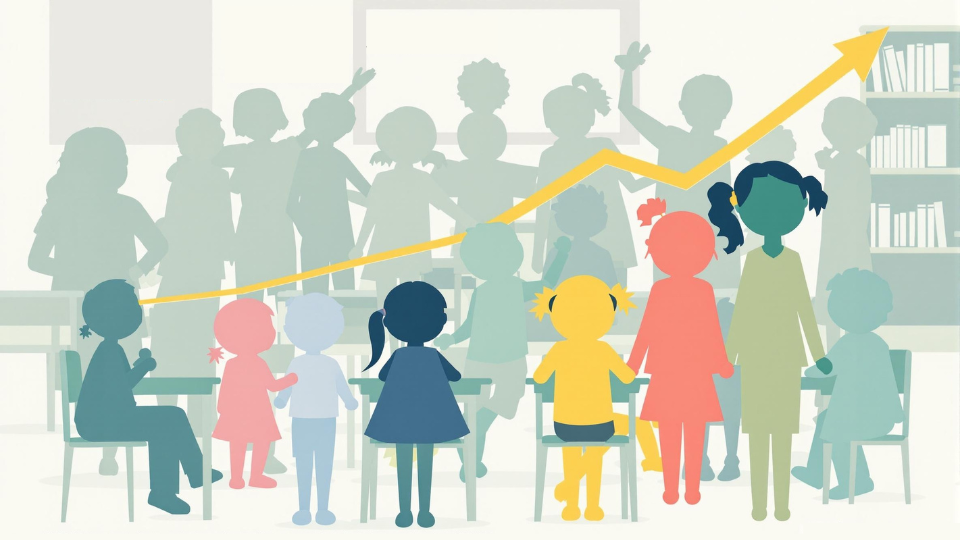
When we think about learning to read and write, we often imagine children memorizing letters and syllables before reading complete words. But have you ever wondered if this approach really works?
Children don't learn to speak by breaking down individual sounds; they learn because language has meaning in their lives. So why do we teach them to read with a method that doesn't align with their natural way of learning?
In this article, we'll explore two key strategies that transform language and literacy teaching: music and pictures as learning tools, and the Global Method as an effective way to read with meaning.
📖 Before reading words, children read the world
Children don't need to know all the letters to begin reading. From infancy, they "read" their surroundings before recognizing a single phoneme:
✔️ They identify visual cues: They know that the logo of their favorite cereal means breakfast.
✔️ They associate sounds with actions: They hear the doorbell and run to open the door.
✔️ They understand expressions and gestures: They see mom's face and know if she is happy or upset.
If a child doesn't understand what they hear or see in their environment, they won't be able to understand what they read either. Language and reading should be taught with meaning, not as a simple repetition of sounds or letters.
🎶 Strategy 1: Music and images as learning tools
The brain learns best when it engages multiple senses. The more a child sees, hears, and experiences, the stronger their learning will be.
🔹 Music as a vehicle for language
Music isn't just entertainment; it's a powerful learning tool. When children sing and perform movements associated with words, they reinforce memory and the meaning of language.
✔️ Songs with gestures: By singing "Head, Shoulders, Knees, and Toes," children not only memorize the words, but also associate them with physical movements.
✔️ Rhythm and repetition: Rhythmic patterns make it easier to memorize new words.
✔️ Emotion and meaning: Music makes words more engaging and memorable.
👉 At the VICON Method, we use songs designed to stimulate language in a multisensory way. Many of our songs convey emotions that help make learning more natural and meaningful.
🔹 Images as the key to reading comprehension
Pictures help children understand and remember words more easily.
✔️ Association with written words: A child understands the word "ball" better if they see it next to a picture.
✔️ Illustrated stories: Before reading a text, looking at the pictures and talking about them helps prepare the brain for reading.
✔️ Observation games: Asking "What do you see here?" instead of reading directly stimulates language comprehension.
👉 In Yo También Leo, the VICON Method's comprehensive reading app, whole-word reading is combined with images and sounds so children learn in an intuitive and meaningful way.
🔠 Strategy 2: Global Method for Meaningful Literacy
The traditional approach to teaching reading begins with single letters and isolated syllables. But what if, instead of teaching "mama," we taught "mama" directly in its everyday context?
The Global Method proposes that children learn to read by recognizing complete words and associating them with their environment.
🔹 How to apply the Global Method at home and at school
✔️ Words with meaning: Instead of starting with context-free syllables, we teach words that children use every day, such as "mom," "water," or "dog."
✔️ Association with experiences: If a child learns the word "ball," it's important for them to be able to see it, touch it, and play with it.
✔️ Complete sentences from the start: A child can "read" the word "park" because they associate it with the place where they play, even if they don't yet recognize each letter individually.
👉 In Yo También Leo, children learn to read with whole words in a visual and audio environment that reinforces comprehension. Instead of memorizing individual letters, children associate words with images and sounds, facilitating more natural and effective learning.
💡 How to integrate these strategies into your daily life
There's no need to add more tasks to your routine, but rather take advantage of everyday moments to reinforce language and reading learning:
✔️ At home: Read product labels, play songs, and tell stories with pictures.
✔️ At school: Use written words in the classroom to point to everyday objects.
✔️ In therapy: Associate pictograms with words and reinforce with music and gestures.
👉 The VICON Method and I Also Read are designed to apply these strategies in a structured way, facilitating language and reading learning at home, in the classroom, and in therapy.
📌 Conclusion: Making language and reading a natural experience
Children learn to speak and read when language makes sense in their lives. If we want them to truly understand what they read, we must teach them with whole words, pictures, and music, in an environment that makes sense to them.
🎶 Want to try these strategies in a guided way?
👉 With the VICON Method, you can access a free 7-day trial and discover how our tools can transform children's language and reading learning.
📱 Plus, with Yo También Leo, you can support your child in their reading and writing journey with an app designed to make learning to read easy, motivating, and tailored to their needs.
👉Click to download it on Google Play (If you have an Android phone)
https://play.google.com/store/apps/details?id=com.diversityapps.yotambienleo
👉Click to download it on the App Store (If you have an iOS phone)
https://apps.apple.com/es/app/yo-tambi%C3%A9n-leo-m%C3%A9todo-global/id1499336488
Access now and start applying these strategies easily and effectively.



One Response
Acabo de publicar un comentario y al leerlo veo que se ha publicado medio en catalán medio en español. Disculpad, pero creo que debe ser un error del programa ya que yo lo escribí solo en español. Gracias.