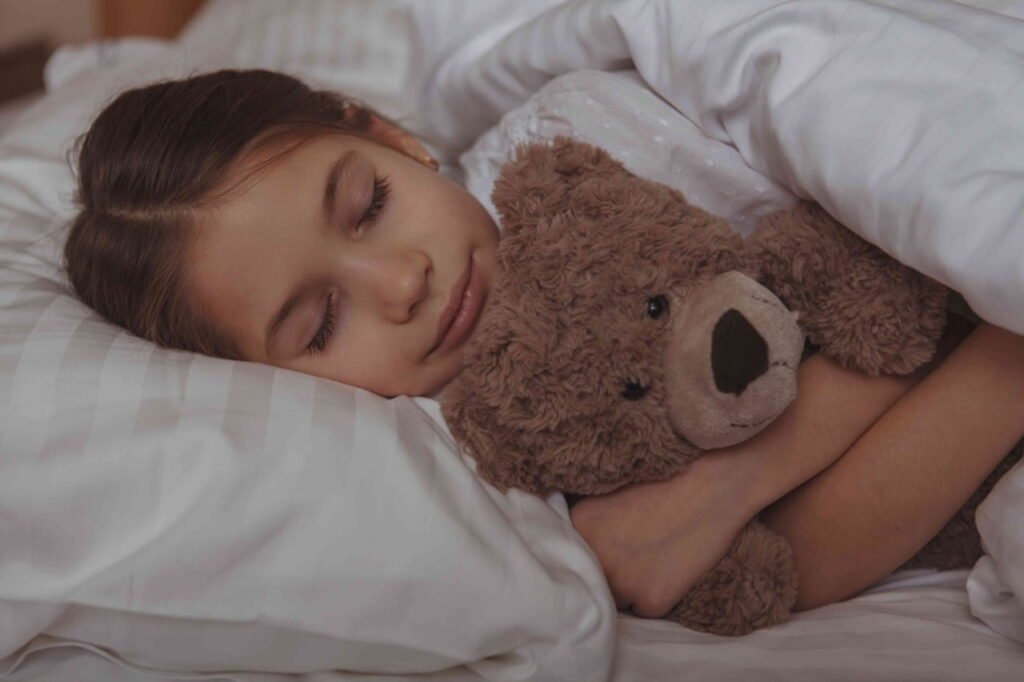
Today we are talking to you about our latest FREE WEBINAR on sleep strategies for children with autism! ??
Cintia Ferris Lantero, child and adolescent psychologist and VICON method therapist, spoke about sleep strategies for children with autism .
A talk aimed at all those families concerned about the sleep of their children with ASD, something that not only affects the well-being of the child themselves but also the family environment.
But... Why is sleep so important?
We all know that sleep is a necessity and that its absence affects our mood and our ability to pay attention.
Normally we have the belief that the fact that children do not sleep is normal, and that the only possible solution is to let time act and wait for the situation to improve.
But the reality is that it is very important to establish good sleep foundations and habits related to it from a very young age.
What can we do to promote healthy sleep in our children? We leave you some strategies for children with autism.
A first general aspect is to recognize what our role is about and let our little one take care of the rest. I will use a scaffold as an example because I think it is a good metaphor for our role.
El andamio ayuda a la construcción del edificio sin confundirse con el mismo y pudiendo quitarse al final del proceso sin que el edificio sufre ninguna modificación.
By this I mean that it is our boys and girls who are going to develop the skills and our accompaniment role is linked to generating the scenarios that allow this development.
In the case of sleep, on the one hand, we must generate an environment and rhythms that promote relaxation and calm, be attentive and point out the different needs, to finally transform these physiological needs into signals that we should go to sleep.
A continuación os contamos algunos factores sobre los que incidir:
sleep environment
For this, the best image is a cave, which is where we have developed the dream over millennia. This is an environment, then, dark, cool and silent. I take advantage of this to deny another of the great sleep myths, which is that children must be taught to sleep with light. Due to the influence of light on the secretion of melatonin, it is essential that the place where children sleep is dark.
Generation of rituals
Es necesario generar secuencias de acciones que se repiten de manera más o menos idéntica. Los dos que voy a proponer hoy tienen que ver con la diferenciación entre el día y la noche, y por ello con la comunicación con nuestras acciones de cuándo ha comenzado el día o cual de los despertares va a ser señalado como el que después del cual comienza el día.
This is a particularly sensitive aspect for children within the autism spectrum and children with some difficulty in language development, why we must communicate this to them through alternative means to linguistics and be very precise in the rhythm and rituals established so that both things are They allow you to predict what time of day is approaching and therefore access it in a more relaxed way.
In the first case, I recommend performing what we call a dramatic awakening that, due to the amount of light that we invite in our tone of voice and the speed at which we act, we indicate that this awakening is the one that accompanies the beginning of the day.
A second strategy is to have a night ritual that is a fixed sequence of actions or activities that, on the one hand, indicate that the day is ending and on the other hand, promote the darkness of stillness, inviting sleep.
Over-tiredness or over-stimulation, what is it?
When a boy or girl sleeps less than the hours they need or spends awake more time than their natural mechanism supports – whether this is due to exposure to interesting stimuli, sensitivity or anxiety itself – the body secretes cortisol to maintain the level. of activity.
This cortisol makes it difficult to fall asleep and interrupts nighttime sleep because it remains in the system, inviting us to stay awake in micro-awakenings.
This can create a vicious cycle of tiredness and little sleep . Some signs that our sleep mayonnaise has been cut are: high irritability, aggressiveness or tantrums.
Sleep strategies for children with autism
As sleep is influenced by the level of activity we have developed, it is very important that stimulating activities are carried out during the day as well as that they stop with enough time for relaxation.
Una es el tipo de apoyos que les ofrecemos a la hora de dormir para conciliar el sueño porque muchas veces nuestros niños/as necesitan más que nuestra presencia para poder dormir.
Es importante diferenciar entre aquellos apoyos que ellas/os pueden luego realizar sobre ellos mismos, como técnicas auto relajantes, que dependiendo de la edad pueden ser: sonido blanco, cantar, decirles una frase, moverles el culete o la cuna, darles un objeto de apego, hacerles un mimo o un masajito, etc.
All of these resources can help the child carry them out with himself.
Éstas estrategias se diferencian de las que conocemos como muletillas que son aquellos apoyos que los niños no pueden hacer por sí mismos y que nos llevan a tener que estar con ellas/os para que se puedan dormir – como son cargarlos en brazos, acostarnos a su lado, alimentarlos…
Without forgetting what is important…
Last but not least, we must not forget to take care of ourselves .
Somos nosotros los adultos al cuidado de los niños quienes debemos estar bien y con nuestras necesidades cubiertas para poder tener la disposición de atravesar esos momentos difíciles de acomodación, cambio y desarrollo.
Thank you to all the families who participated in this last webinar. What will we talk about in the next webinar? Stay tuned to our social networks, we will tell you soon???
We remind you: Facebook ,Facebook Group and Instagram