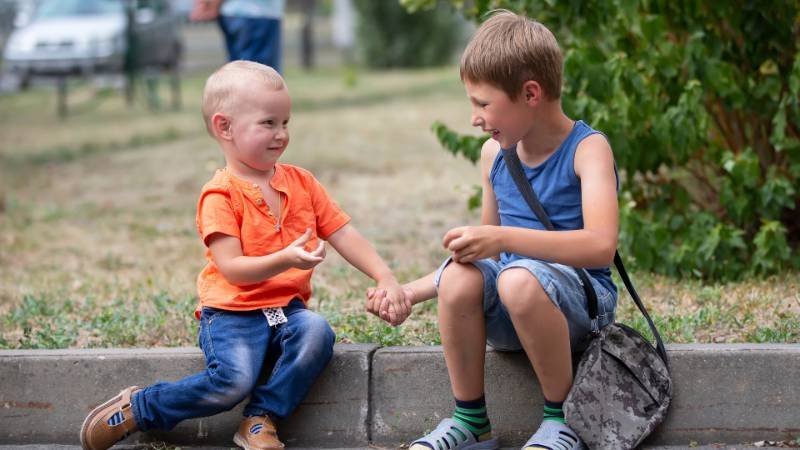
This is the third time this week that your other child has said "okay, whatever" and gone to his room.
And you've noticed. Of course you've noticed. You've told him "wait a moment" so many times that he's stopped asking. He's learned, without anyone teaching him, that he's the one who can wait. The one who adapts. The one who doesn't cause trouble.
And inside, a different kind of guilt gnaws at you: "I'm stealing her childhood."
In summer, this is amplified. Sixty days together, twenty-four hours a day, without school to break things up, without therapy to structure the day. And all the strain concentrated in one house.
What the brother carries (and doesn't say)
Siblings of children with special needs often develop wonderful qualities: tremendous empathy, maturity, sensitivity, and a capacity for caregiving. But they also carry burdens they almost never talk about:
- Guilt for getting angry with his brother, or for being embarrassed by him in public.
- Normalized resignation: plans that are not made, birthdays that are not attended, places where one cannot enter.
- Pressure to be "the one who's doing well": noticing that their problems seem small compared to those of the other person, and deciding not to talk about them.
- They need to get attention by misbehaving, because they have learned that's how they get noticed.
None of this means you're doing anything wrong. It means there's a difficult reality he's also experiencing, and it needs to be acknowledged.
What can you do this summer
- Fifteen minutes of his time, sacred. It doesn't take a whole day or a special plan. It takes a short time, every day or almost every day, where he's the absolute star: no siblings, no phones, no interruptions. Let him choose what you do. Consistency matters more than duration.
- Allow him to feel all his emotions. Let him say he's fed up. Let him say he's angry. Let him say he's sometimes ashamed. And don't correct him with "but it's not his fault." He already knows that. He needs to be able to feel it without being a bad person for it.
- Explain to him what's really happening, at his level. Silence doesn't protect; it breeds fantasies. A child who understands why his sibling does what he does stops believing it's his fault or that it's contagious.
- Don't make him a caregiver. Let him help, yes. But don't make him responsible for him. The phrase "take care of your brother" carries much more weight than it seems.
- Share the plans, too. If the whole summer revolves around what one person can tolerate, the other person will miss out on summer altogether. Have one day of their own time, even if you have to find someone to spend with the other. It's worth it.
When the game brings them together
Here's something beautiful and very practical: your sibling can be the best language stimulator your child has. Not because you make them work on it. Because children imitate each other in ways they don't imitate adults.
A brother who sings, plays, acts silly, repeats things, and waits for the other to answer is unknowingly undergoing therapy. And at the same time, he's building his own relationship with the other, one that doesn't involve you.
When the three of you —or the two siblings together— do the daily VICON Method session , two things happen at once: your child learns with the most powerful model there is, and the other stops feeling like their sibling's activities are a separate world from which they are excluded. The songs become something for the family, not "their therapy."
👉 A little time each day that unites the three of you: try the VICON Method free for a week → https://www.metodovicon.com/login#registro
This summer, let him feel it was his turn too. Even if it's just for fifteen minutes.